
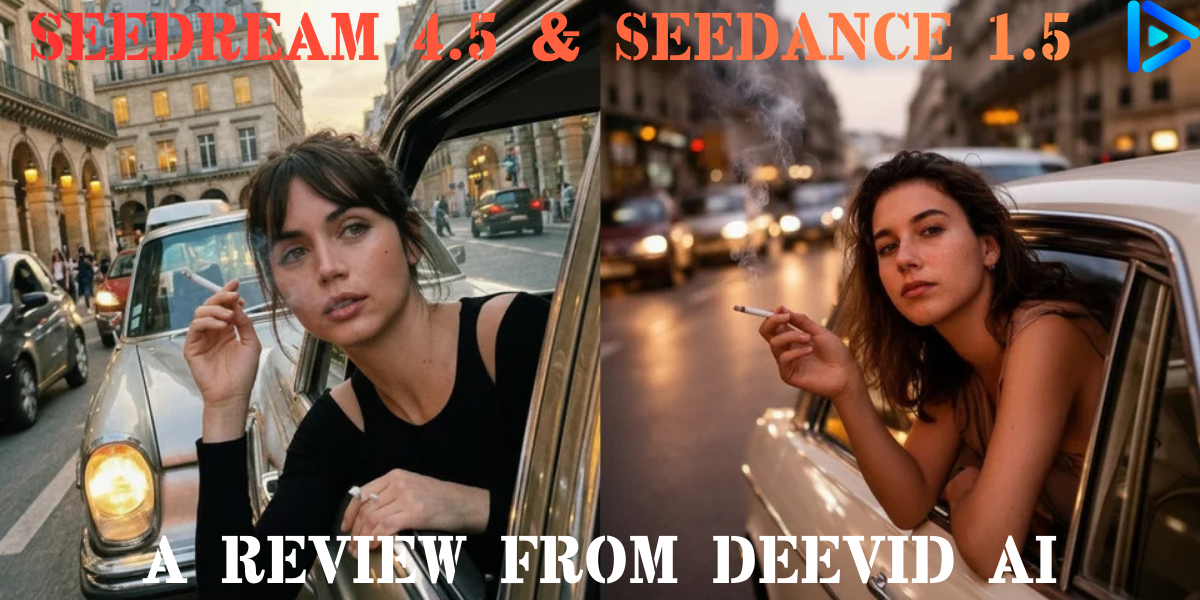
Seedream 4.5 & Seedance 1.5 Review: ByteDance’s New Power Duo for Image–Video Creation
The “Seed” family from ByteDance has quietly become one of the most important model line-ups in visual generative AI. With Seedream 4.5 on the image side and Seedance 1.5 on the video side, ByteDance is now covering the full creative chain: from high-fidelity images to cinematic video with native audio.
From DeeVid AI’s point of view, these two models are a natural pairing: Seedream 4.5 as a production-grade image engine for ads, posters, and product visuals; Seedance 1.5 as a storytelling engine for social video and e-commerce creatives. In this review, we’ll look at what each model does well, how they complement each other in an image to video ai workflow, and where they sit relative to heavyweights like Nano Banana Pro and Google VEO 3.1.
Seedream 4.5: Production-Ready Image Model for Design & Branding
On the image side, Seedream 4.5 is positioned as a scaled-up upgrade to previous Seedream versions, with improvements across prompt adherence, alignment, and aesthetics.
Key strengths
1. Strong reference consistency & multi-image editing
Seedream 4.5 is designed to accurately identify main subjects, keep facial features, lighting, and color tone consistent, and selectively edit elements while preserving the rest of the image.
In practical use, it can blend multiple reference images and keep materials, textures, and identities stable across a whole batch of visuals. That’s very useful for:
- Brand sets (same product or model across multiple angles)
- Character sheets for storytelling
- Multi-angle packshots for e-commerce

2. Typography & dense text rendering
A major highlight of Seedream 4.5 is its handling of typography and dense text. It can generate poster-like layouts with readable body text, labels, and logo-like marks that still look clean and designed, not just “AI scribbles.”
This makes it especially strong for:
- Exhibition or event posters
- E-commerce key visuals with pricing and feature lists
- Product detail pages and infographics
- Multi-panel ad creatives
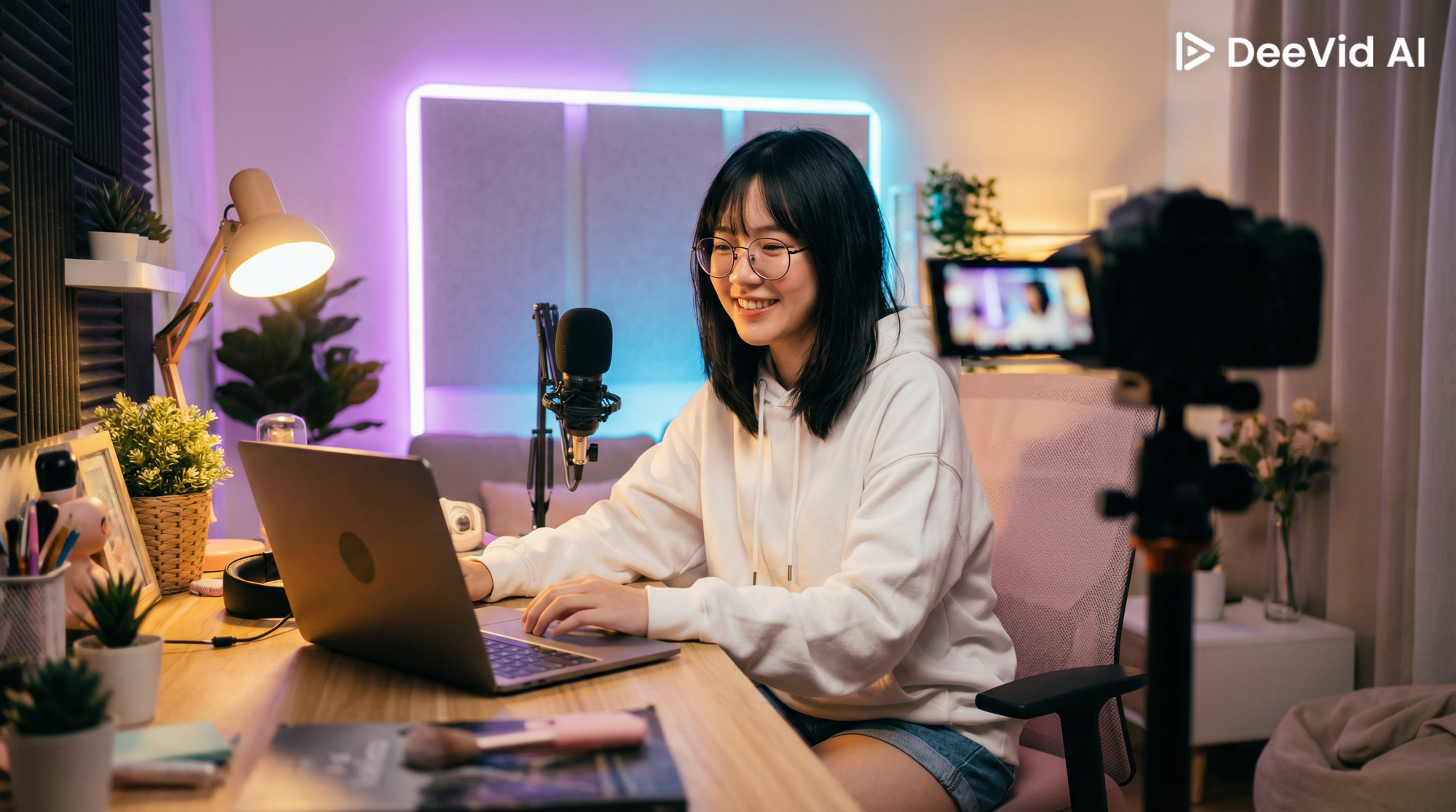
3. Cinematic, high-resolution visuals
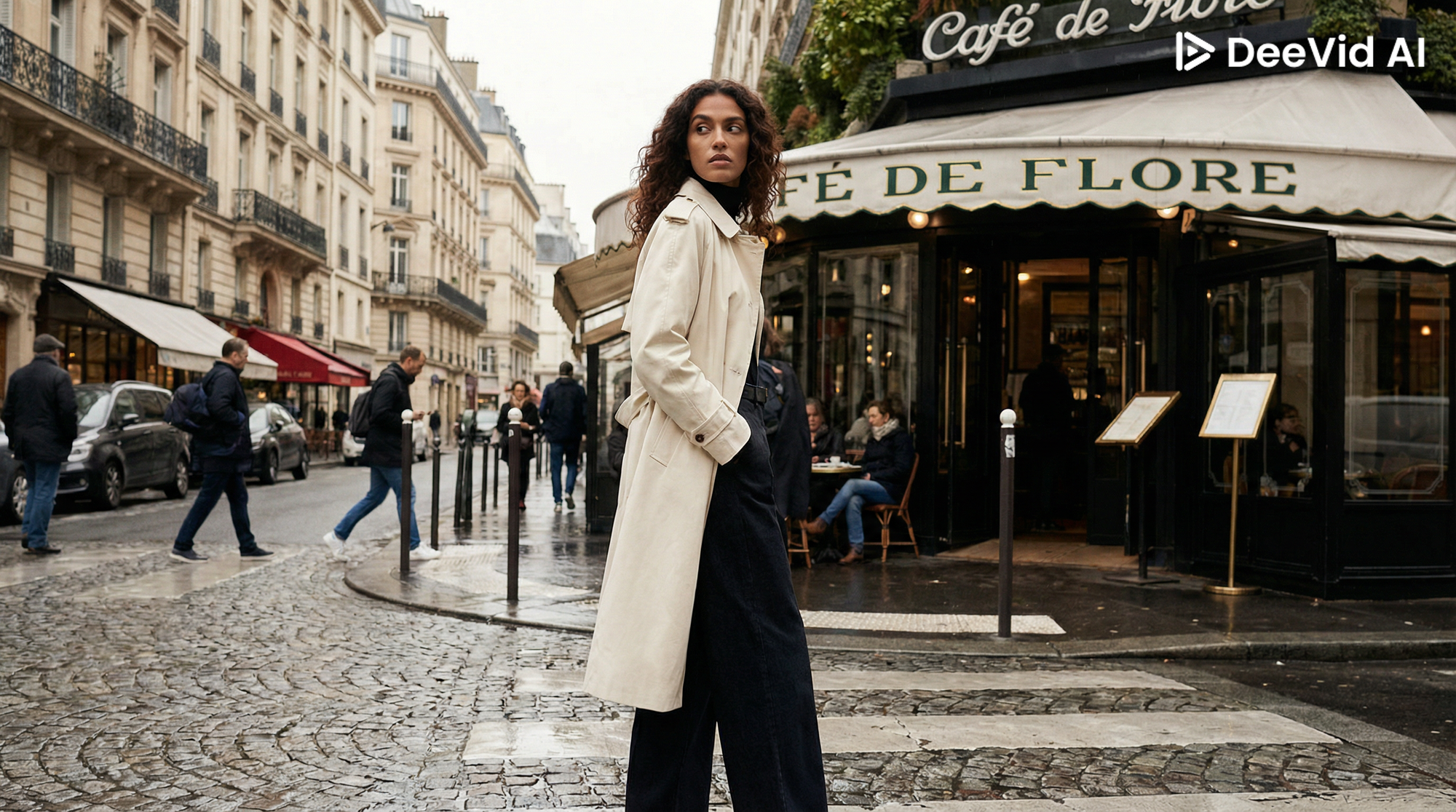
Seedream 4.5 is capable of cinematic composition, realistic depth, and sophisticated color palettes, and is suitable for 2K–4K image outputs when the hosting platform allows.
From a DeeVid perspective, this matters a lot in two places:
- High-end image-only workflows (hero banners, hero product shots, editorial art)
- First / last frames in image-to-video pipelines, where the still frame must already look like a finished ad
Where Seedream 4.5 shines inside a DeeVid-style stack
If we imagine Seedream 4.5 sitting alongside other image models in DeeVid AI, it’s the “designer’s choice” when:
- You need brand-consistent product images across multiple angles
- You’re generating posters, flyers, or landing page hero visuals with readable text
- You want to keep characters or mascots consistent from image to image
- You’re building multi-image storyboards that must share the same identity, lighting, and style
For quick, playful concept art, you can still rely on lighter or more experimental models. But for campaign visuals that must ship, Seedream 4.5 feels closer to a professional design tool than a toy.
Seedance 1.5: From Text & Images to Cinematic Video with Native Audio
On the video side, Seedance 1.5 is ByteDance’s advanced AI video model, designed to turn both text and images into cinematic videos with coherent motion and built-in sound.
Core capabilities
1. Powerful style transfer
Seedance 1.5 supports strong style transfer: you can apply illustration, oil painting, cartoon, or other reference aesthetics to the generated video while preserving the core content and motion.
This is particularly useful for:
- Branded campaigns with a specific visual identity
- Social trends (anime style, painterly style, sketchy UGC, etc.)
- Cross-platform adaptation of the same concept in different art styles
2. Automatic audio generation with AV sync
One of the standout features of Seedance 1.5 is its ability to generate audio along with the video. Background music, ambience, simple sound effects, or even basic voice-like elements can be created in sync with the visuals.
This turns otherwise silent generations into ready-to-publish clips, ideal for platforms like TikTok, Instagram Reels, and YouTube Shorts.
3. Advanced semantic understanding
Seedance 1.5 is tuned to follow complex prompts: detailed scenes, camera paths, motion direction, emotional tone, and stylistic instructions. It supports flexible durations and common aspect ratios such as 16:9 and 9:16, making it suitable for both horizontal and vertical formats.
The result is a model that can generate not only “one-shot” clips but also multi-beat narratives with recognizable motion patterns, especially when combined with strong reference images.
Seedance 1.5 Pro for e-commerce
In some integrations, a “Pro” variant of Seedance 1.5 is specifically tuned for e-commerce product videos, drawing on patterns from high-performing ad creatives.
A typical workflow looks like:
- Add Image – Upload a product or reference image.
- Write Scenario – Describe the hook, setting, and key selling points.
- Generate Video – Get a 9:16 or 16:9 product video with motion and audio, ready for social platforms.
For DeeVid-style users, this fits perfectly with:
- TikTok / Reels / Shorts ads
- UGC-style unboxings and “how to use” demos
- Quick A/B tests of hooks, intros, and angles
Image–to–Video Workflow: Seedream 4.5 × Seedance 1.5
Looked at in isolation, both models are strong. Put together, they form a very clear pipeline that matches how DeeVid thinks about workflows:
- Design with Seedream 4.5
- Generate a consistent product image pack (hero shot + detail shots + lifestyle scenes).
- Ensure logos, typography, and colors follow brand guidelines.
- Animate with Seedance 1.5
- Use the best stills as image references for video generation.
- Add prompt instructions for camera movement, motion style, pacing, and emotional tone.
- Let Seedance 1.5 handle motion, transitions, and audio.
- Refine inside an editor (like DeeVid)
- Trim, re-time, and add overlays where needed.
- Export multiple aspect ratios (16:9, 9:16, 1:1) and variants for A/B testing.
In a multi-model DeeVid environment that already includes models like Nano Banana Pro, Kling, and VEO, Seedream + Seedance can be treated as the dedicated “Seed lane”:
- Seedream 4.5 → image / KV / storyboard assets
- Seedance 1.5 → narrative, audio-rich video generations
How They Compare to Nano Banana Pro & Google VEO 3.1
Both ByteDance models will inevitably be compared with Google’s flagship stack: Nano Banana Pro (image) and VEO 3.1 (video).
Seedream 4.5 vs Nano Banana Pro
Shared strengths
- Both focus on high-fidelity, high-resolution image generation, strong prompt following, and complex scene synthesis.
- Both handle text inside images well enough for posters, infographics, and structured layouts.
Where Seedream 4.5 differentiates
- Seedream 4.5 leans heavily into multi-image editing, character consistency, and poster-like layouts.
- It feels particularly tuned for campaign KVs, product pages, and editorial-style compositions rather than just single images.
Where Nano Banana Pro still leads
- Nano Banana Pro is deeply integrated into Google’s productivity tools and shines in document-centric use cases: slides, diagrams, structured infographics, and content that sits inside a productivity suite.
- For teams already embedded in that ecosystem, Nano Banana Pro remains the natural default for “office-style” visuals.
From a DeeVid creative standpoint, Seedream 4.5 and Nano Banana Pro feel more like complements:
- Seedream 4.5 → campaign visuals & artboards
- Nano Banana Pro → documents & structured information graphics
Seedance 1.5 vs Google VEO 3.1
Shared strengths
- Both are advanced text to video ai models capable of cinematic quality with native or tightly integrated audio.
- Both support common social and cinematic aspect ratios in HD resolutions.
Seedance 1.5 advantages in practice
- Strong style transfer based on references makes it extremely fit for social content, stylized UGC, and brand-specific looks.
- E-commerce–oriented variants make it easier to generate high-converting product videos without manual editing of sound or pacing.
VEO 3.1 advantages
- VEO tends to emphasize longer video extension, precise start/end-frame control, and detailed narrative options, making it a better fit for longer-form storytelling or cinematic experiments where users want fine-grained control.
From a DeeVid content-creation point of view:
- Seedance 1.5 → best for short-form ads and social video, where style and hook matter more than length.
- VEO 3.1 → better for longer narratives and technical control when users are willing to iterate more per clip.
Which Model Should You Use When?
A simple way to position Seedream 4.5 and Seedance 1.5 inside a DeeVid-style multi-model environment:
Choose Seedream 4.5 if you are:
- A brand designer or marketer needing polished campaign imagery
- Building landing page heroes, product detail pages, or poster sets
- Trying to keep characters, mascots, or products consistent across many images
- Designing multi-language layouts with small, readable text
Choose Seedance 1.5 if you are:
- A social media or performance marketer producing TikTok, Reels, or Shorts
- An e-commerce seller who needs fast, ready-to-run product videos
- A creator turning static product shots into animated, audio-backed ads
- Someone who wants video + sound in one generation step
Outlook: How DeeVid AI Can Orchestrate These Models
At DeeVid AI, we don’t believe one model will “win it all.” The real power comes from:
- Routing each task to the best model (Seedream 4.5, Nano Banana Pro, VEO, Kling, etc.)
- Seamlessly chaining image and video models into full workflows
- Wrapping everything in an editor so users can work in scenes and stories, not in model parameters
In that ecosystem, Seedream 4.5 and Seedance 1.5 are strong building blocks:
- Seedream 4.5 covers high-end image and layout needs with robust reference and text handling.
- Seedance 1.5 turns those assets into cinematic, audio-ready videos tuned for modern platforms.
For DeeVid users, that means one step closer to a future where “idea → storyboard → final video” really can happen in a single, continuous AI video generator workflow—without sacrificing the production quality that brands expect.